 Image 1 of 5
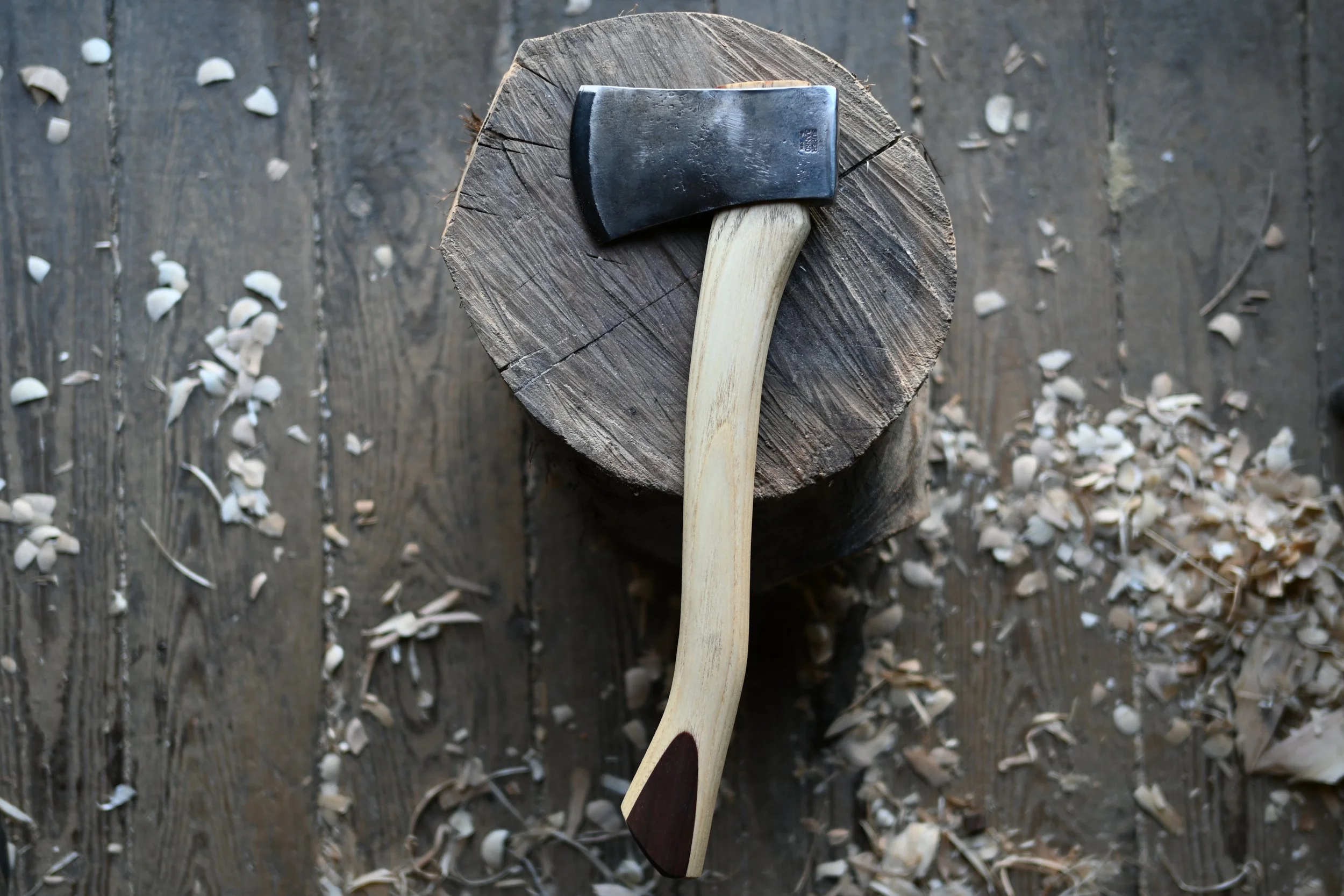 Image 2 of 5
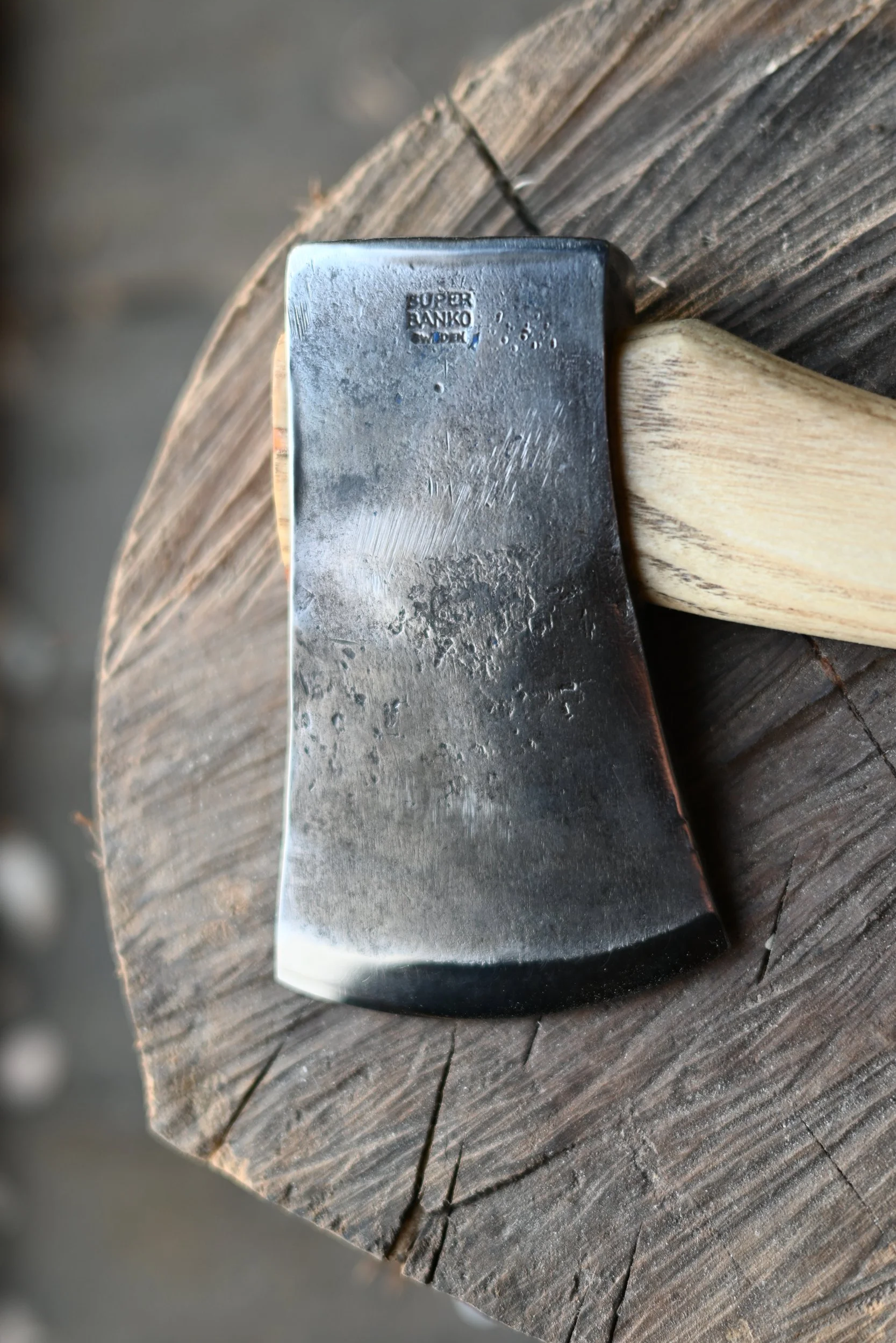 Image 3 of 5
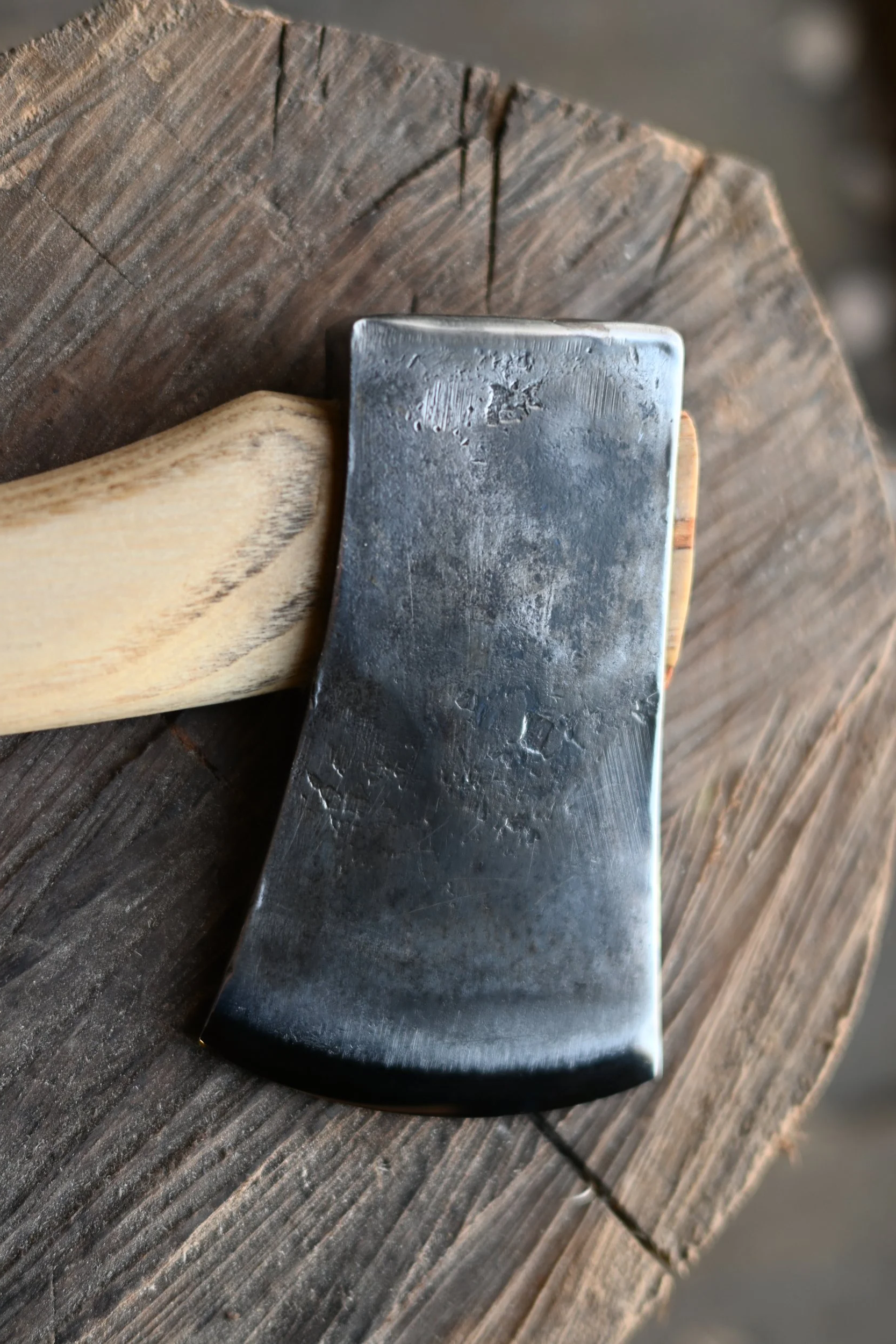 Image 4 of 5
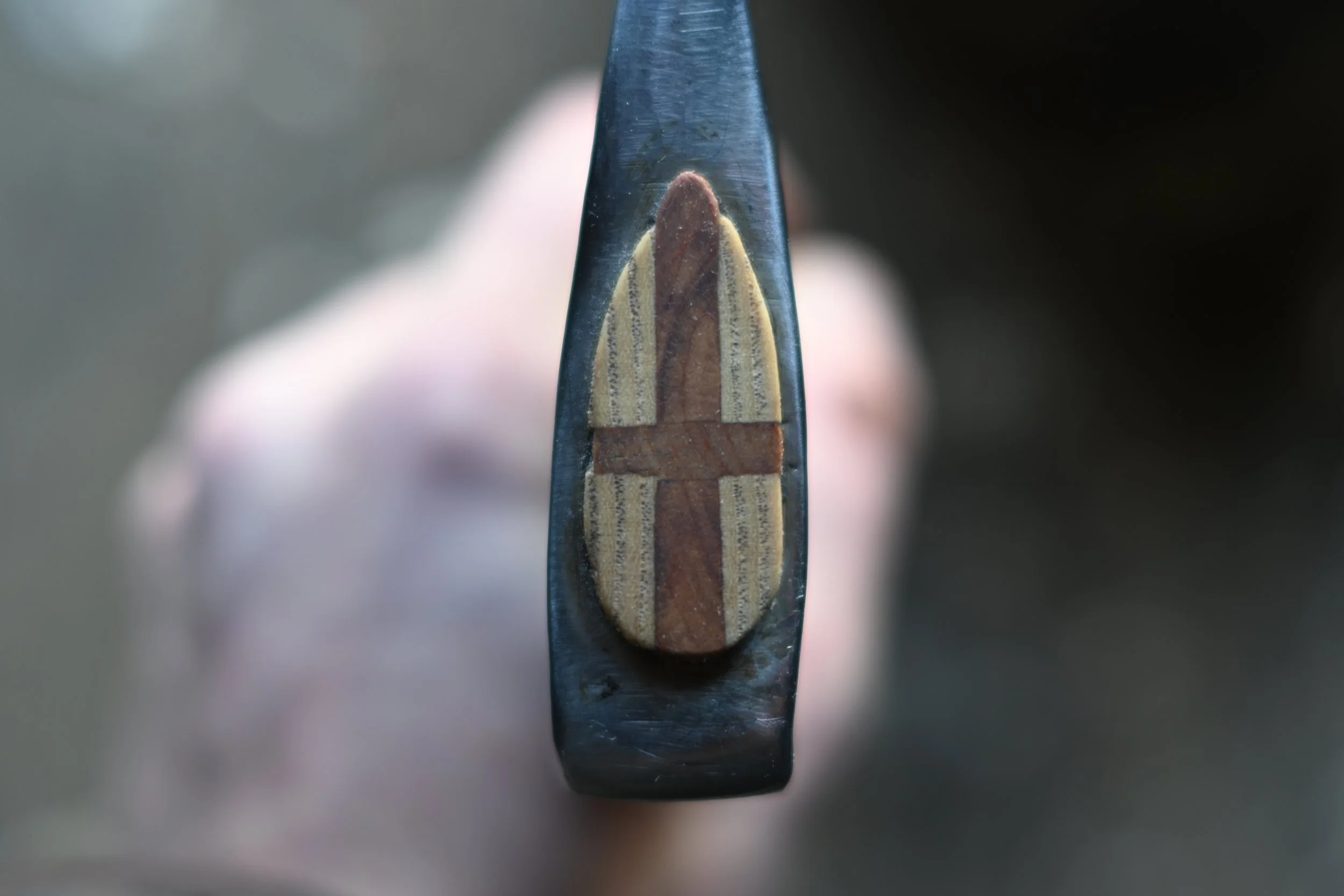 Image 5 of 5
Total Length: 15in
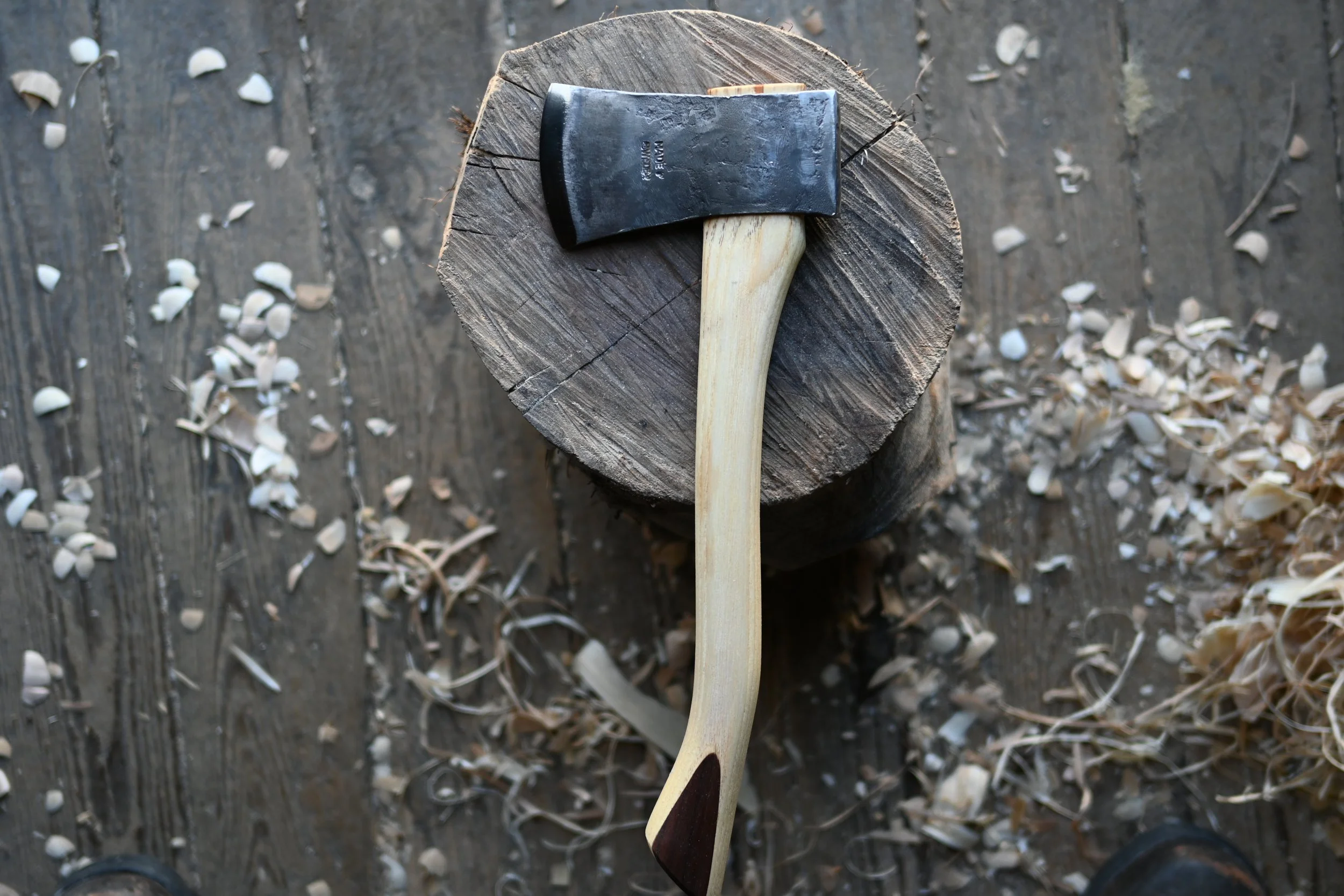
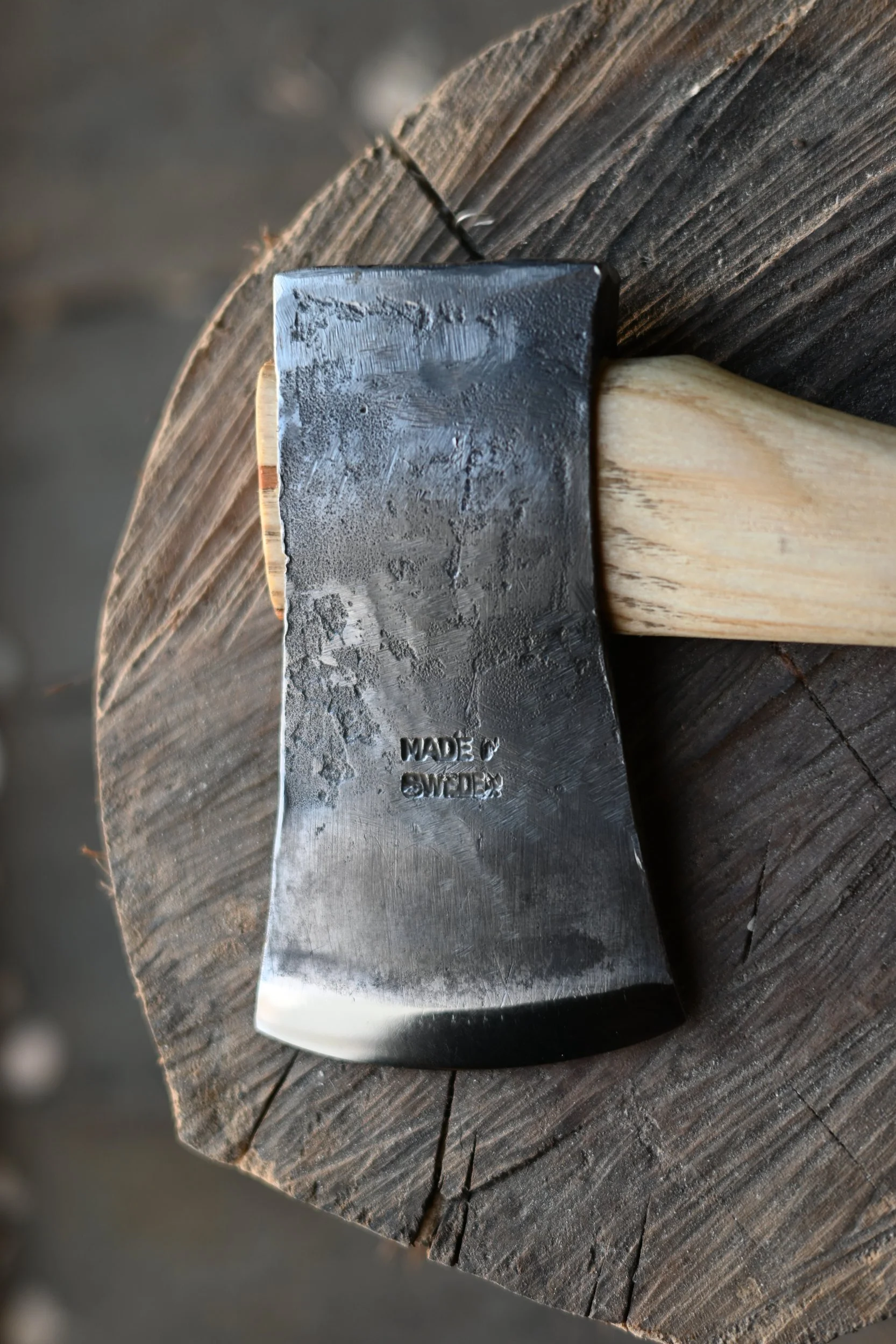
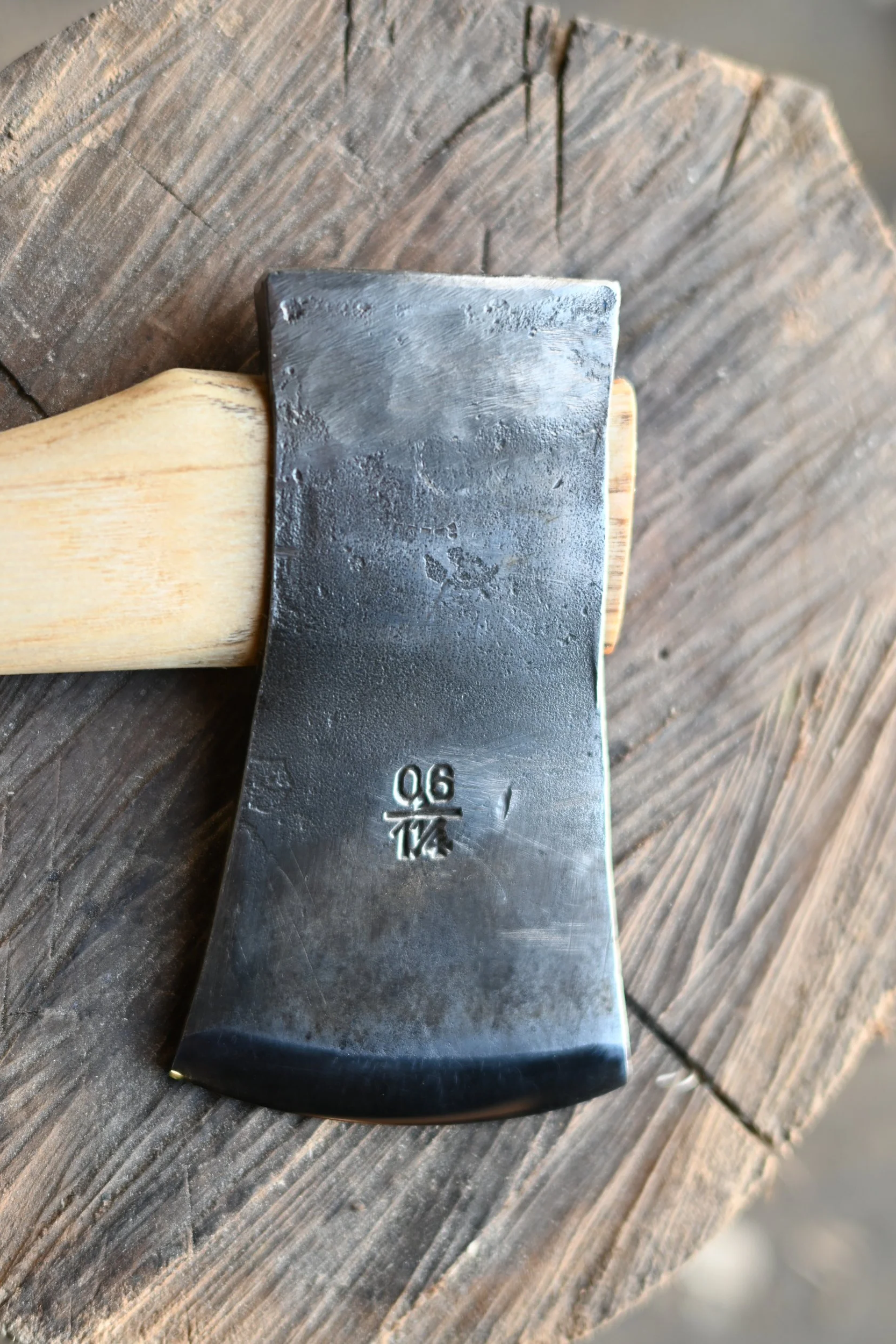
The 1.25lb hatchet head was produced in the 1960s by the Swedish axe manufacturer Saters Yxfabrik. Axes of this make and period are noted for their quality in edge retention and toughness, as well as for their excellent craftsmanship.
Its edge has been restored to a razor sharp 20 degree bevel, perfect for carving, chopping, and splitting.
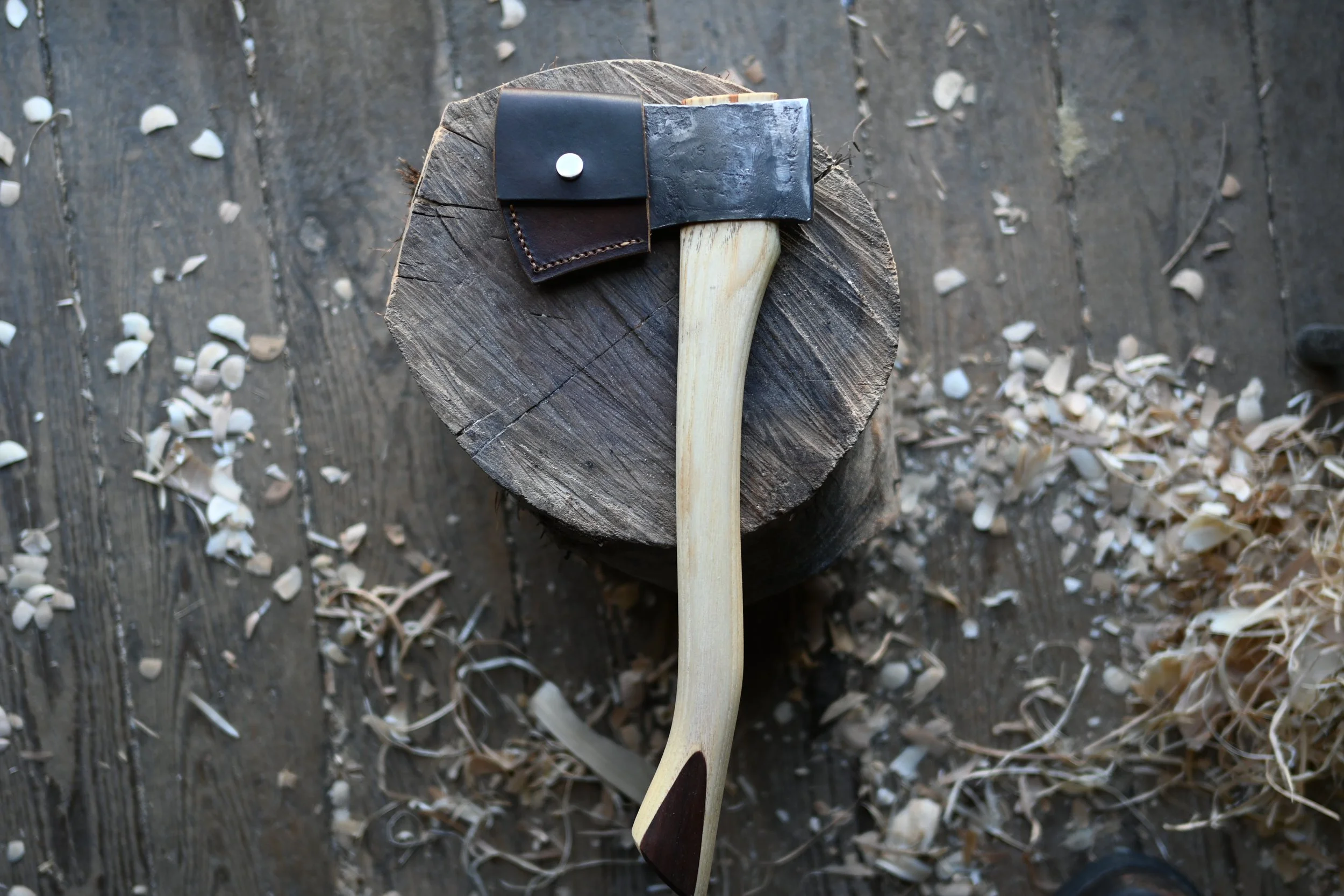
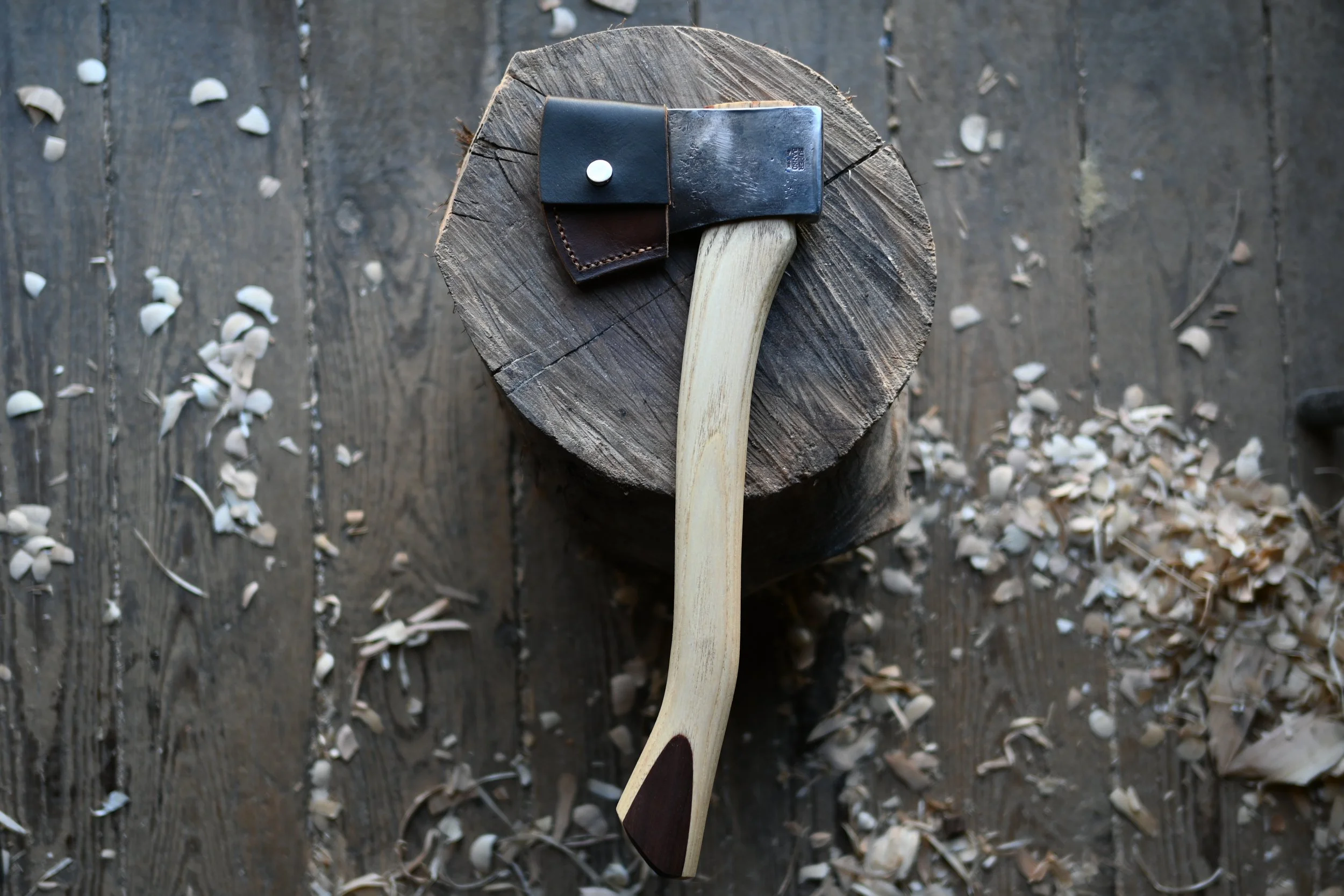
A custom leather mask is made to protect both the user and the axe’s edge. Only a single snap is required to remove and replace the mask, making it easily manipulated with one hand and slim enough to slide into a pocket while the axe is in use.
At this weight and handle length, this hatchet is perfect for carving, chopping, and splitting any wood that you would likely come across while bushcrafting. Paired with a knife and bucksaw, a hatchet makes up the holy trinity of bushcraft equipment and in my opinion is the lightest weight and most efficient loadout for bushcrafting.
The handle was made from an ash tree that was traditionally felled, rived, and cured exclusively with hand tools. Each billet left to dry for two years before being planed into a board and cut to a rough form of the final handle.
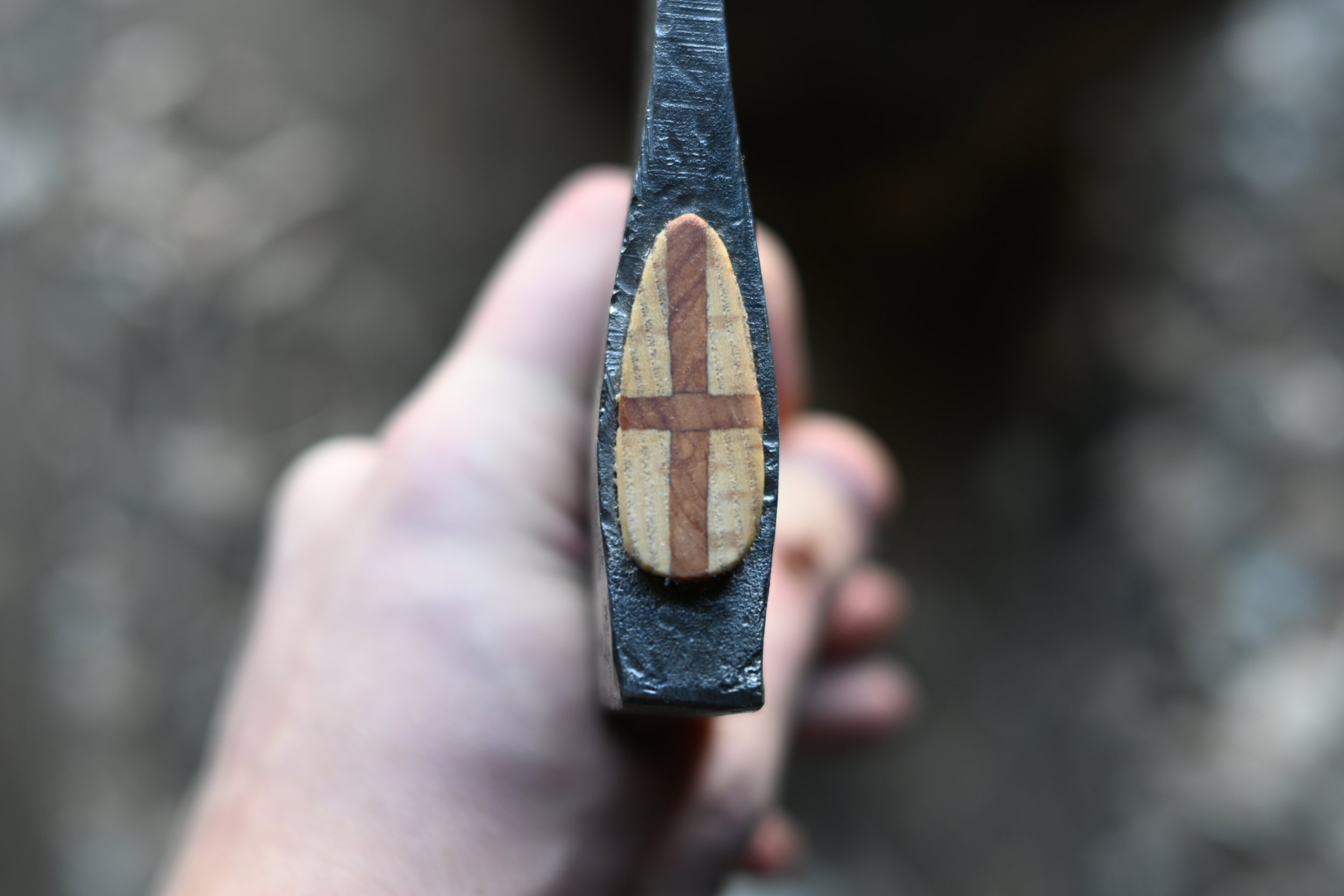
Using a draw knife, the handle is then carved down to precisely fit the inside of the axe eye. Before the wedges are driven, the handle is baked to reduce its moisture content, ensuring a perfect fit that will only tighten over time as the wood absorbs ambient moisture and drinks in protective oil. A birch cross wedge is utilized to provide a secure fit and black walnut palmswell scales are affixed, offering a striking appearance.
Over a dozen coats of raw linseed and tung oil have been applied, protecting the handle from moisture and preserving it for generations of use. Periodically apply linseed oil to maintain the handle's finish.
Tips for use:
The most effective method of splitting wood— while also being safest for the tool, is to hold the axe in one hand and the wood in the other, and bring them down together onto a supported surface such as a log. The axe’s inertia will drive it deeply into the wood. Once a crack has formed all the way through the wood, carefully twist the axe, prying the last strands apart. Refrain from doing this before the wood has almost fully split or while the head is embedded in the supporting log below. This puts unnecessary stress on the handle. Be wary of splitting from a direction where the haft will make contact with the wood. This is known to splinter the handle.
Total Length: 15in
The 1.25lb hatchet head was produced in the 1960s by the Swedish axe manufacturer Saters Yxfabrik. Axes of this make and period are noted for their quality in edge retention and toughness, as well as for their excellent craftsmanship.
Its edge has been restored to a razor sharp 20 degree bevel, perfect for carving, chopping, and splitting.
A custom leather mask is made to protect both the user and the axe’s edge. Only a single snap is required to remove and replace the mask, making it easily manipulated with one hand and slim enough to slide into a pocket while the axe is in use.
At this weight and handle length, this hatchet is perfect for carving, chopping, and splitting any wood that you would likely come across while bushcrafting. Paired with a knife and bucksaw, a hatchet makes up the holy trinity of bushcraft equipment and in my opinion is the lightest weight and most efficient loadout for bushcrafting.
The handle was made from an ash tree that was traditionally felled, rived, and cured exclusively with hand tools. Each billet left to dry for two years before being planed into a board and cut to a rough form of the final handle.
Using a draw knife, the handle is then carved down to precisely fit the inside of the axe eye. Before the wedges are driven, the handle is baked to reduce its moisture content, ensuring a perfect fit that will only tighten over time as the wood absorbs ambient moisture and drinks in protective oil. A birch cross wedge is utilized to provide a secure fit and black walnut palmswell scales are affixed, offering a striking appearance.
Over a dozen coats of raw linseed and tung oil have been applied, protecting the handle from moisture and preserving it for generations of use. Periodically apply linseed oil to maintain the handle's finish.
Tips for use:
The most effective method of splitting wood— while also being safest for the tool, is to hold the axe in one hand and the wood in the other, and bring them down together onto a supported surface such as a log. The axe’s inertia will drive it deeply into the wood. Once a crack has formed all the way through the wood, carefully twist the axe, prying the last strands apart. Refrain from doing this before the wood has almost fully split or while the head is embedded in the supporting log below. This puts unnecessary stress on the handle. Be wary of splitting from a direction where the haft will make contact with the wood. This is known to splinter the handle.